
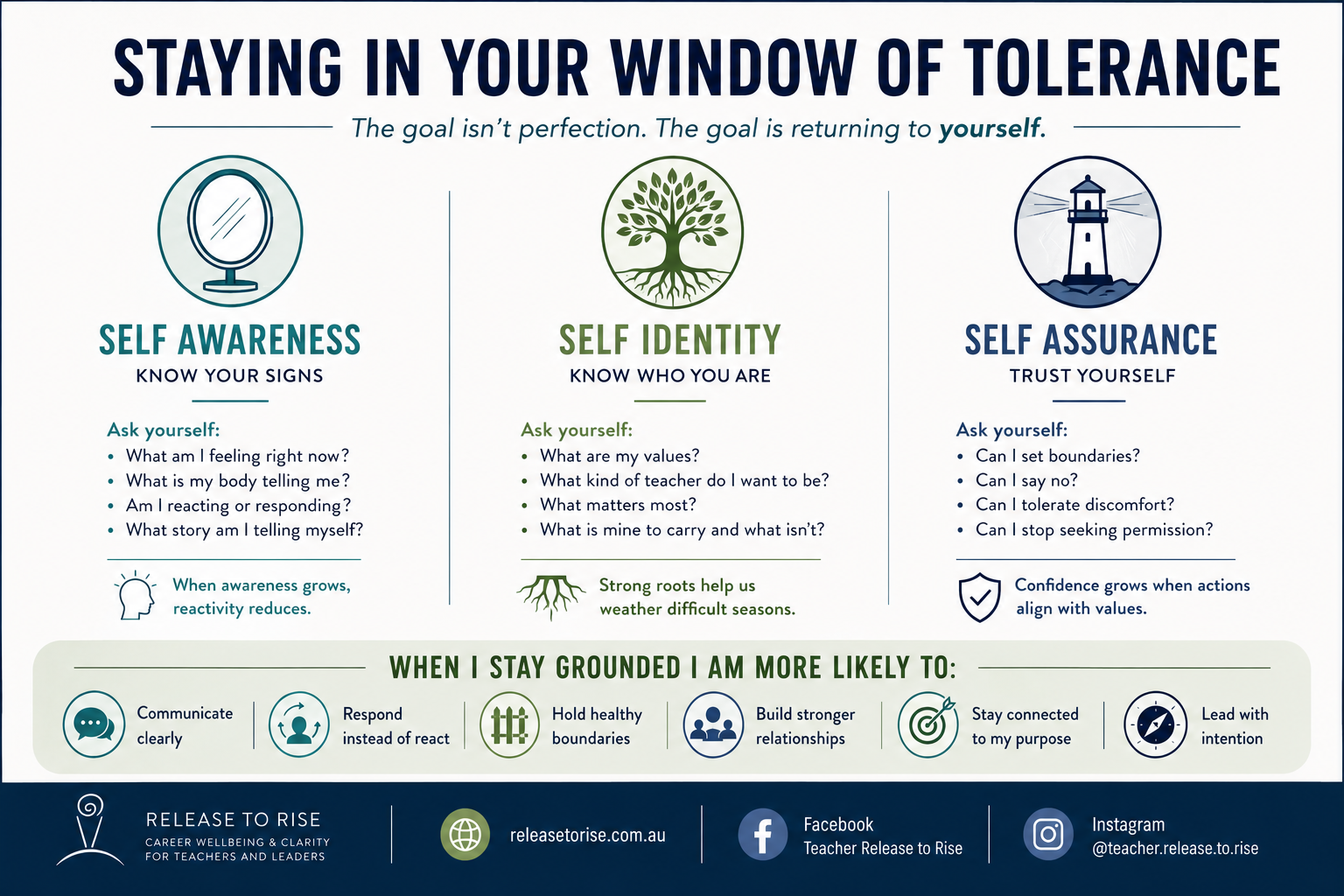
Staying in Your Window of Tolerance Isn't About Being Calm All the Time
One of the things I have been thinking about lately is how often we talk about teacher wellbeing as though the goal is to be calm, balanced and resilient all the time. Anyone who has worked in a school for more than five minutes knows that isn't realistic.
There are going to be difficult students, challenging parents, changing expectations, staff conflict, deadlines, uncertainty and those weeks where everything seems to happen at once. We are human beings before we are educators, and our nervous systems respond accordingly.
What interests me more is not whether we occasionally move outside our Window of Tolerance. We all do. The real question is whether we notice it happening and whether we have enough self awareness to stop our stress from becoming someone else's burden.
When I think about the teachers and leaders who seem to navigate challenges well, they usually have three things in common.
Firstly, they know themselves. They recognise their warning signs before they become behaviours. They know when they are becoming reactive, defensive, overwhelmed or withdrawn. They understand their triggers and can catch themselves before they spiral.
Secondly, they have a strong sense of identity. They know what they stand for. They know the kind of teacher, leader or colleague they want to be. When things become chaotic, they can return to their values instead of being pulled in every direction by the emotions and expectations of others.
Thirdly, they trust themselves. They can set boundaries. They can say no when necessary. They can have difficult conversations. They don't need everybody to agree with them in order to feel okay. They understand that looking after themselves is not selfish, it's what allows them to continue showing up well for others.
I think this is where the next conversation around teacher wellbeing needs to go. Less focus on whether our cup is full or empty and more focus on how we stay connected to ourselves when things get tough.
Because the goal isn't perfection.
The goal is being aware enough to recognise when you're drifting away from who you are and having the skills and confidence to find your way back.
